
Antenarrative builds on Weick’s sensemaking through its “bet” connotation, allowing for both retrospective and prospective activities. Antenarratives are, therefore, not just precursors to narrative, but active speculative wagers – a prospective form of sensemaking. It is a “process that is looking forward at what is arriving from the future into the now” (Boje, 2018, no page numbers). Antenarratives therefore form one corner of a triad, opposite narrative and living story. Boje, borrowing from Czarniawska (1997), locates narrative in the past — a fossilizing form of story that accumulates sedimented ontological weight. Living story, on the other hand, connotes the liquid present tense where future and pass are colliding (Boje, 2014). It “recognizes the plurality of selves that constitute our identity, and our reflexivity” (ibid., p. 6). Yet this is not limited to individuals. Organizations also carry living stories – itself an assemblage of the living stories of its constituents. Antenarrative, on the other hand, shuttles between past and future to consistently destabilize and reterritorialize living stories and petrifying narratives – it remains as ongoing and as unsettled as Weick’s sensemaking. Put differently, antenarrative maps onto Deleuze’s (1986) notion of the gaseous state as outlined in Cinema 1.
“For, if we start out from a solid state, where molecules are not free to move about (molar or human perception), we move next to a liquid state, where the molecules move about and merge into one another, but we finally reach a gaseous state, defined by the free movement of each molecule” (Deleuze, 1986, p. 84).
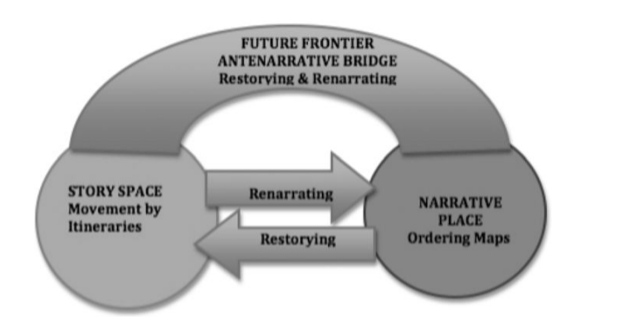
Figure 1. Boje’s triadic antenarrative framework (from Boje, 2011, p. 4).
Put otherwise, we can theorize narrative as a solid state, where discourses are fixed like nitrogen in tuber roots yet also continually turned over and reproduced. Living story then constitutes a liquid state, where story molecules move more freely than rigid narratives yet also carry semblances of stability. Antenarrative, on the other hand, constitute gaseous, free moving, fragmentary sensemaking particles that traverse space and time, recontextualize within new places and times, and petrify into narratives through their interaction with living stories. Boje (2011, p. 4) represents this tripartite framework in Figure 2 below.
Figure 2 also reveals actions that form movements between past narratives and present living stories: (1) Renarrating entails a recontextualization of past solid narratives through the liquid force of present living stories; (2) Restorying entails a recontextualization of present living stories through the echoes of past narratives (see also Golombek & Johnson, 2021; Rieker & Johnson, 2023); (3) Antenarrative bridges entail future-looking bets on future stories – future primordial narratives constituted through gaseous, understructured fragments of liquid living stories or solid narratives.
Within this gaseous domain, Boje (2014, p. 11) also identifies four types of antenarrative:
- Linear-antenarrative follows a pre-planned chronological structure. It is the most used antenarrative in management and organizational practice, often governed by a theory of vulgar pragmatism[1], or the goal to just “do what works.” The theorietical project of Boje’s (2014) Storytelling Organizational Practices: Managing in the quantum age is to resist and destabilize the entrenched dominance of vulgar pragmatism within organizational theory. In short, linear antenarratives are driven by chronology, causality, and monologic plots (Boje, 2001a).
- Cyclic-antenarrative, paralleling Ricoeur’s (1984) hermeneutic circle, represents what is often called an organizational life cycle. For example, many economists and financial analysts theorize cycles of market prosperity and recession – history, in other words, repeats itself if you wait long enough. Another example of a cyclic antenarrative is the idea that organizations follow a set of phases such as birth, maturation, decline, and dissolution — a series of identities that repeat themselves in ongoing yet predictable cycles of becoming (King, 2011).
- Spiral-antenarrative, on the other hand, adds a degree of refraction to the cyclic antenarrative, allowing for either the expansion or contraction of organizational storytelling based on the collective antenarrative bets enacted by its members. Spirals, in other words, take on flows like cascades, vortices, or double helixes. They are iterative, morphing, and agential when compared to cyclic-antenarratives (Boje, 2011).
- Rhizomatic-antenarratives borrow from Deleuze and Guattari (1987) and resist linearity or hierarchy or otherwise centralized forms of organization and structure. Instead, they proceed in nonlinear, unexpected, and surprising ways. Compared to the above three antenarratives, rhizomatic-antenarratives are non-hierarchical, dynamic, heterogenous, decentered (Boje, 2001a) and characterized by generativity and counterforces (Smith & Boje, 2011). This contrasts with an arboreal structure, which supposes a hierarchy of verticality: roots, trunk, stems, leaves. (See Canagarajah [2018] for a discussion of rhizomatic versus arboreal models of language.)
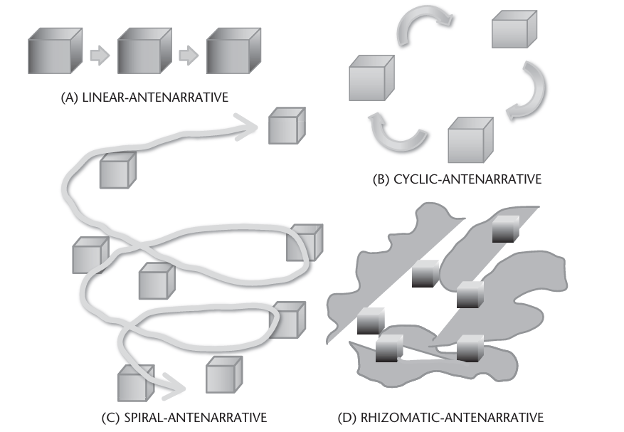
Figure 2. Boje’s (2014, p. 12) four types of antenarratives.
[1] See Pennycook (1997) for a discussion of vulgar pragmatism in English for Academic Purposes. He argues that many EAP approaches at the time uncritically approached language education through the lens of functional efficiency and an unreflective acceptance of standards, conventions, and rules. This critiques Swales’ corpus-based approach as too neutrally framed – an advocacy for style based on “what works” within samples in one’s discourse community without challenging underlying assumptions or foundations of such discourses (i.e. critical pragmatism).
Ontogenetic Reflection
One of the most common linear antenarratives that I encounter these days on LinkedIn is the question of whether text is or is not generated by AI, as if there was even a binary to begin with. As we all know, AI-generated text is cyborg text. We are yet to arrive at fully autonomous artificial intelligence, and until then there is still a human that needs to push the perpetual motion machine and give it its kickstarting activation energy.
I think that a more interesting way to explore antenarratives is to think about this uncanny valley through different types of antenarratives. I consider the uncanny valley narrative a form of linear antenarrative. There seems to be a strong knee-jerk reaction of people to accuse writers of generating AI text, because I think in general many people are uncomfortable with the prospect of encountering vast swaths of text generated by machines, because until very recently the production of text was a monopoly of human users of language. But we have now moved into the era of machine users of language. Well, “user” might not be the right word, but at the very least we have machine generators of language.
So we can also think about these antenarratives in different forms. In a linear antenarrative, humans are writing LinkedIn posts that accuse other users of using AI when writing their posts, their academic papers, or their email correspondence. However, what do we see in a cyclic antenarrative? Well, one thing that we can see is that history repeats itself. Before AI, the question was not about AI- or human-generated; the question often centered around native versus non-native speakers of English. I’ll focus on English for now since it is currently and for the foreseeable future the dominant language of academic publishing. Conversations often revolved around what constituted native or correct forms of language use, and any forms of language that deviated from an established norm were often flagged as non-native and often, by ideological extension, deficient, and in need of remediation, editing services, and otherwise further education before they were deemed appropriate for participation within English-speaking academic circles. This was and still is clearly discriminatory, yet sometimes I wonder if history is not repeating itself as we continue to level accusations of text being produced by AI. However, the accusation is not whether somebody is a non-native speaker, but there are still deficiency arguments — namely, that the user is lazy, not creative, or otherwise unfit to participate within the public forum of discourse.
But when we transform into a spiral antenarrative, we can see that perhaps AI is presenting not the exact same cycle of storied approach to discrimination, but one that has a diffracted degree of upward pressure. And this is coming from the removal of the human. After all, non-native speakers might have been treated as deficient, but they were not treated as being non-human machines. Yet, on the other hand, I think what we often see in this AI panic is the fear of total homogenization — that comes from AI homogenizing the discourse — of what constitutes proper or correct writing, and what writing is deemed to be of proper academic style. For some, this is a welcome equalizer; for others, this is a sad death knell for the diversity of academic writing. Yet the introduction of machines presents a greater degree of panic, as machines don’t necessarily have a diversity of thought or a diversity of relational ethics when it comes to engaging with diverse forms of literary voice and academic style.
Which brings us to a more rhizomatic antenarrative: how can we look into the future and promote a more equitable, charitable, and hopefully generative approach to writing without the homogenizing effect of generative AI? And I think it starts with the relational ethics of translingualism. Suresh Canagarajah often talks about translingualism as a diversity of semiotic repertoires and the negotiation of meaning that occurs in a shuttling between different politically named languages or modalities. Yet at the heart of translingualism are not repertoires but ethics: the ability to read and engage and negotiate, and to not view the other as a deficient user of language, but as an anomalous or distinct user of language.
The question is not whether humans or AI have distinct writing voices, but rather how do we relate to a diversity of voices. A rhizomatic perspective allows for the grid of intelligibility of acceptable academic voices to expand, and it calls for a degree of negotiation between both readers and writers. Writers cannot simply do as they please; anything does not go. But readers also need to relax their standards and find ways to appreciate and negotiate the forms and functions that are put before them.
In other words, an antenarrative for academic writing is not one that has AI or does not have AI, and it does not endorse nor condemn AI usage. Rather, what it suggests is that arguments and discourse are strengthened, not weakened, by a plurality of styles and voices and presentations; that by introducing degrees of difference, we also make a system more antifragile, to use the nomenclature of public scholar Nassim Nicholas Taleb. An antifragile system is not only resilient in the face of AI; it is resilient in the face of the overbearing AI skeptics. In other words, we as anomalously embodied writing subjects take on different configurations within the writing cyborg. The question is: can we open our minds to these distinct configurations? Even I am struggling to do so, but I realize that the horizon calls for me to do so anyways.


Leave a Reply